Together, we solve the challenges of tomorrow.
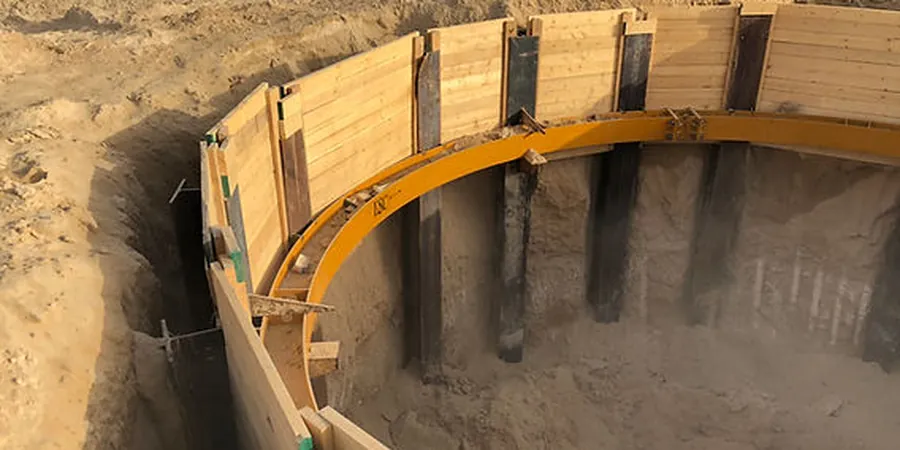
READ MORE →Foundations form the very bedrock of any construction project, and in Wigan, their importance cannot be overstated. This category encompasses the full spectrum of ground engineering and substructure works required to safely transfer building loads into the earth, ranging from domestic extensions on shrinkable clay to large-scale commercial developments on former industrial land. A robust foundation design mitigates against settlement, subsidence, and structural failure, ensuring longevity and safety for the entire building. For homeowners and developers across the borough, understanding local ground conditions is the first step towards a successful build, making professional geotechnical and structural input essential from the earliest planning stages.
Wigan's geology presents a fascinating and challenging picture, directly influencing foundation strategy. The area is underlain by the Pennine Coal Measures Group, a Carboniferous sequence of interbedded sandstones, mudstones, and historically significant coal seams. This legacy of deep mining has left a complex pattern of recorded and unrecorded shallow workings across the borough, introducing a significant risk of void collapse and crown-hole subsidence. Superficial deposits add further complexity, with widespread glacial till and pockets of glaciolacustrine clay, while the floodplains of the River Douglas and its tributaries feature soft alluvium and peat. A thorough desk study and ground investigation are therefore not just advisable but critical to identify the specific strata and any mining hazards present on a site.
Navigating the regulatory framework is a key part of foundation design in the UK. All works must comply with the stringent requirements of the Building Regulations 2010, specifically Approved Document A (Structure), which mandates that foundations be designed, constructed, and installed so as to safely sustain and transmit all loads. For projects in former mining areas like Wigan, a Coal Mining Risk Assessment is often a statutory requirement of the planning process, guided by the Coal Authority's permitting regime. Furthermore, the British Standard BS 8004:2015 provides the definitive code of practice for foundation design, while the Eurocode 7 framework for geotechnical design is the prevailing standard for ensuring structural safety and serviceability. Adherence to these norms, often enforced through warranty provider requirements from bodies like NHBC or LABC, is non-negotiable.
The types of projects requiring specialist foundation solutions in Wigan are diverse. A simple Victorian terraced house renovation might only need localised underpinning, whereas a new housing estate on a greenfield site with glacial clay could necessitate a comprehensive pile foundation design to bypass the shrink-swell zone. The conversion of a historic cotton mill or warehouse into apartments demands careful retention of existing structures with new internal foundations. Similarly, commercial developments on brownfield land, such as retail parks on the fringes of the town centre, almost universally require deep foundations due to contaminated ground and historical fill. Even domestic conservatories and single-storey extensions can encounter old mine entries, requiring reinforced raft solutions or mini-piling.
Wigan's unique geology, dominated by the Pennine Coal Measures and a history of shallow mining, creates a high risk of subsidence and void collapse. Superficial deposits like glacial till and soft alluvial clays also vary greatly over short distances. A site-specific design, following a rigorous ground investigation, is essential to identify these hazards and engineer a foundation that safely bypasses or mitigates them, ensuring long-term structural integrity.
Foundation construction is primarily governed by the Building Regulations 2010 (Approved Document A) and the British Standard BS 8004:2015. In former mining areas like Wigan, The Coal Authority also requires a Coal Mining Risk Assessment for planning permission. Designs must adhere to Eurocode 7 for geotechnical safety, and warranty providers like NHBC have their own stringent standards for new residential developments.
Historical mining means shallow, often unrecorded, workings may be present beneath a site. This risk necessitates a specialist mining investigation alongside a standard ground investigation. The findings often dictate the use of deep pile foundations to transfer loads below any potential void zones, or reinforced raft foundations designed to span anticipated subsidence, rather than conventional shallow strip footings.
The process begins with a Phase 1 Desk Study to assess historical and geological maps, followed by a Phase 2 Intrusive Ground Investigation with boreholes or trial pits to sample the soil and rock. In Wigan, this is often combined with a coal mining report. The collected data is used by a structural engineer to model the ground and design a compliant foundation solution, from simple trench fill to complex piling, detailed in construction-ready drawings.
We serve projects across Wigan and surrounding areas.