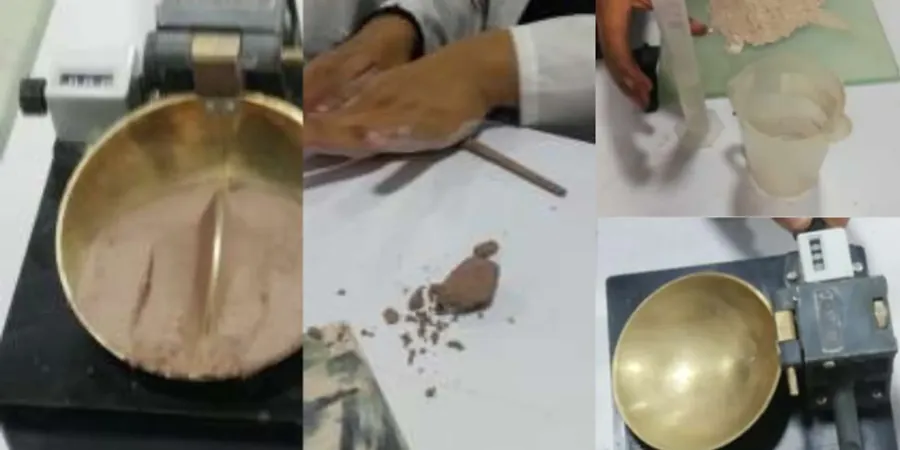
Geotechnical laboratory testing forms the backbone of every safe and compliant construction project in Wigan, providing the empirical data that engineers need to understand the behaviour of the ground beneath our feet. This category encompasses the full spectrum of physical and mechanical tests carried out on soil and rock samples recovered from site investigations. From simple classification tests to advanced strength and compressibility assessments, the laboratory environment offers controlled conditions that field tests simply cannot match. In a town like Wigan, where the legacy of coal mining and heavy industry has left a complex tapestry of natural and made ground, relying on robust lab data is not just best practice—it is an absolute necessity for managing risk.
Wigan's geology is dominated by the Pennine Middle Coal Measures, a Carboniferous succession of interbedded sandstones, siltstones, mudstones, and numerous coal seams. Superficial deposits of glacial till, glaciofluvial sands and gravels, and post-glacial alluvium along the River Douglas corridor add further complexity. The town's industrial past means that extensive areas are underlain by artificial ground, including colliery spoil, ash, and general fill. These materials are notoriously variable and can exhibit unexpected behaviour, such as collapse compression or elevated sulphate content that attacks concrete. A thorough laboratory testing programme, starting with fundamental tests like grain size analysis (sieve + hydrometer), is crucial to characterise this variability and identify potential hazards that might otherwise be missed.
All laboratory testing carried out for geotechnical purposes in Wigan must adhere to the rigorous standards set out in the UK, primarily BS 1377:1990 (Methods of test for soils for civil engineering purposes) and BS EN ISO 17892 (Geotechnical investigation and testing). These standards dictate everything from sample preparation and test methodology to calibration requirements and reporting formats, ensuring consistency and reliability. For projects involving contaminated land, which are common given Wigan's industrial legacy, testing may also need to comply with Environment Agency guidance and the protocols in documents such as CLR11 (Model Procedures for the Management of Land Contamination). Adherence to these standards is not optional; it is a fundamental requirement of the National House Building Council (NHBC) and local authority building control, and it underpins the safe design of foundations, earthworks, and retaining structures.
The types of projects in Wigan that demand comprehensive laboratory testing are diverse. Residential developments on former colliery sites require careful assessment of fill compressibility and chemical aggressivity. Infrastructure schemes, such as road improvements or flood alleviation works along the River Douglas, depend on accurate strength parameters for earthwork specification. The restoration of historic structures like Wigan Pier and the redevelopment of town centre sites rely on understanding the bearing capacity and settlement characteristics of the underlying soils. For any project where cohesive soils are encountered, determining the Atterberg limits is essential for predicting volume change potential and assessing workability. Without this data, designs are based on assumption rather than evidence, leading to costly over-engineering or, far worse, unforeseen failure.
Laboratory testing is performed under strictly controlled conditions on representative samples, allowing for precise measurement of fundamental soil properties like grading, plasticity, and shear strength. Field testing, such as SPTs or plate load tests, measures soil behaviour in situ, capturing the effects of stress history and fabric but with less control. A comprehensive site investigation always integrates both, using lab data to calibrate and validate field results for a complete ground model.
Wigan's extensive mining and industrial past has left a legacy of artificial ground, including colliery spoil, ash, and general fill. These materials are highly variable and can contain contaminants or exhibit collapse compression on wetting. Laboratory testing is the only reliable way to characterise their geotechnical properties and chemical aggressivity, which is essential for foundation design, assessing risk to buried concrete, and ensuring compliance with environmental regulations for redevelopment.
The quality of lab results depends entirely on sample quality. You must offer undisturbed samples in sealed, labelled containers, protected from vibration, extreme temperatures, and moisture loss. A clear chain of custody, project specification detailing the required standards, and a preliminary ground profile help the lab select appropriate test methods. Disturbed samples are acceptable for classification tests like particle size distribution, but not for strength or compressibility testing.
The test schedule should be designed by a qualified geotechnical engineer based on the project's ground investigation report and the proposed structure's requirements. A basic suite might include moisture content, Atterberg limits, and particle size analysis for soil classification. Foundation design typically requires shear strength and oedometer consolidation tests. The schedule must align with Eurocode 7 and the specific demands of the site, considering factors like Wigan's coal mining legacy and made ground.
We serve projects across Wigan and surrounding areas.