← Home · Roadway

Rigid Pavement Design in Wigan: Ground Engineering for Concrete Roadways

Together, we solve the challenges of tomorrow.

READ MORE →

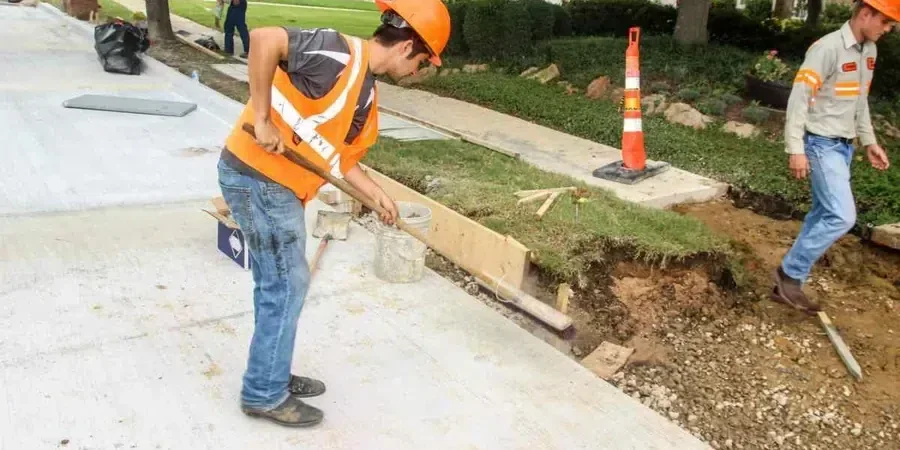
A common mistake we see in the Wigan area is treating a rigid pavement design like a standard slab on grade, ignoring the ground beneath. When a concrete pavement fails here, it is rarely the concrete mix that's at fault. It is the subgrade. A rigid pavement does not flex to accommodate settlement; it bridges, until it can't. Then you get cracking, faulting at the joints, or a complete loss of ride quality. Our team approaches every Wigan project by first understanding the ground, from the glacial till and alluvial deposits along the River Douglas to the deeper Coal Measures that define much of the borough's subsurface. A test pits investigation is often the starting point to visually log the near-surface strata before any pavement design calculations begin.

In Wigan, the most critical layer of a rigid pavement is not the concrete, but the first metre of ground beneath it.

Process overview

Wigan sits at an elevation of roughly 40 metres above sea level, but the ground conditions can vary dramatically across short distances. The legacy of deep coal mining, which shaped the town's identity until the last colliery closed in the 1990s, left behind a patchwork of backfilled shafts and shallow workings. For a rigid pavement, this translates into a risk of differential settlement that no amount of steel reinforcement can fully mitigate without proper ground treatment. We combine the findings from a grain size analysis of the subgrade with the Atterberg limits to determine the frost susceptibility of the soil, a factor often overlooked in UK pavement design. The CBR value is not enough on its own; we need to know how the soil behaves when it is wet, and in Wigan, with an average annual rainfall exceeding 800 mm, it will be wet. Our design approach integrates these parameters to specify the correct sub-base thickness, joint spacing, and load transfer mechanisms for the expected traffic loading.
Rigid Pavement Design in Wigan: Ground Engineering for Concrete Roadways
Technical reference image — Wigan

Local context

The contrast between Wigan's wet, mild winters and its occasional summer heatwaves creates a significant challenge for rigid pavement joints. The concrete expands and contracts, and if the subgrade is a shrinkable clay, the seasonal movement doubles. We frequently encounter areas where the natural ground is a soft, compressible alluvium near the Leeds and Liverpool Canal or the River Douglas floodplain. Placing a rigid pavement here without Improvement is a recipe for early failure. The risk is not just structural; it is financial. A failed concrete pavement on an industrial estate or a bus depot means costly downtime. We mitigate this by recommending stone columns or lime stabilisation where the CBR is below 2%, ensuring the pavement foundation meets the stiffness requirements of the design before a single cubic metre of concrete is poured.

Need a geotechnical assessment?

Reply within 24h.

Email: contact@geotechnical-engineering.biz

Visual overview


Technical parameters

ParameterTypical value
Design Traffic (msa)0.5 to 80+ (HD 26/06 categories)
Concrete Flexural Strength4.5 to 6.0 N/mm² (28-day)
Subgrade CBR Target>5% (upper 600 mm)
Joint Spacing (unreinforced)4.5 to 6.0 m typical
Sub-base Thickness (Type 1)150 to 250 mm
Frost SusceptibilityAssessed per MCHW Clause 613
Load Transfer Efficiency>75% (dowel bars, AASHTO 1993)
Design Life20 to 40 years (per client spec)

Additional services

01

Subgrade Evaluation & CBR Testing

In-situ plate bearing tests and laboratory CBR assessments on undisturbed samples to determine the stiffness of the natural ground beneath the proposed pavement.

02

Thickness Design & Joint Detailing

Analytical design of concrete slab thickness, joint spacing, and load transfer systems using both UK DMRB standards and international methods for heavy-duty pavements.

03

Improvement for Pavement Foundations

Design of lime stabilisation, cement-bound sub-bases, or vibro stone columns to improve weak alluvial soils and historic fill areas common in Wigan.

04

Construction Phase Testing & Validation

On-site concrete sampling, cube testing, and post-construction proof rolling to verify that the finished pavement meets the design specification and performance criteria.

Reference standards

BS 5930:2015+A1:2020 (Code of practice for ground investigations), Eurocode 7 (BS EN 1997-1:2004, UK National Annex), MCHW Series 600 & 1000 (Specification for Highway Works), AASHTO Guide for Design of Pavement Structures (1993, overlay procedures)

Quick answers

What is the typical cost of a rigid pavement design for a Wigan project?

For a site-specific rigid pavement design in Wigan, including ground investigation interpretation and pavement thickness calculations, the fee typically ranges from £1,600 to £4,480 depending on the pavement area and the complexity of the ground conditions. A larger industrial yard with variable subgrade will be at the higher end of this range.

Can you design a rigid pavement over an old coal mining area in Wigan?

Yes, this is a common request in the borough. The approach involves a thorough desk study of the Coal Authority records, followed by targeted boreholes and possibly geophysical surveys to locate any shallow workings. If voids are found, we specify a grouting programme or a reinforced pavement with a sacrificial layer to manage the subsidence risk.

What is the difference between reinforced and unreinforced rigid pavement?

Unreinforced rigid pavements rely on closely spaced joints to control cracking and are typically used for roads and light industrial areas. Reinforced pavements contain steel mesh and have wider joint spacings, making them suitable for areas with poor ground or heavy, concentrated loads like container handling yards.

How long does a rigid pavement design take from investigation to final report?

After the completion of the ground investigation fieldwork, which itself can take two to three weeks depending on access, our design team typically delivers the final pavement design report within three to four weeks. This includes the laboratory testing programme and the analytical design calculations.
Location and service area

We serve projects across Wigan and its metropolitan area.

View larger map