← Home · Roadway

Flexible Pavement Design for Wigan’s Ground Conditions

Together, we solve the challenges of tomorrow.

READ MORE →

Wigan’s average elevation of 45 metres above sea level masks a subsurface that varies from dense glacial till to pockets of soft alluvium along the Douglas valley. That contrast has caught out more than one road scheme. Flexible pavement design here depends on reading the ground correctly before a single layer of bituminous material is placed. The design transfers wheel loads through the asphalt surface, into the granular base and sub-base, and finally to the subgrade. In Wigan’s post-industrial sites, where colliery spoil and made ground are common, the subgrade rarely behaves as a textbook material. We combine in-situ CBR testing for road design with laboratory classification to establish a reliable subgrade modulus. Where the Douglas floodplain introduces soft clays, in-situ permeability tests become essential to size drainage layers and prevent premature structural failure.

A correctly designed flexible pavement in Wigan’s glacial till can exceed 40 years of service if the subgrade modulus is not overestimated.

Process overview

The design sequence starts with a dynamic cone penetrometer driven into the formation level behind the DW Stadium area. Readings are logged every 100 mm. Back in the lab, a gyratory compactor produces specimens at design air voids, and repeated load triaxial testing measures resilient modulus. The pavement model is built in a multilayer elastic analysis programme, with each layer assigned a stiffness, Poisson ratio and thickness. Traffic loading is converted to equivalent standard axles using the 4th power law. Wigan’s bus corridors along Wallgate and Ormskirk Road demand a design life of 40 years, so the cumulative damage factor drives the asphalt thickness. The binder course is specified by penetration grade and softening point, while the surface course must resist both studded tyre polishing and standing water. A Type 1 sub-base to SHW Series 800 sits over a capping layer where the CBR falls below 5 %, a condition we encounter regularly in former mining areas.

Key pavement design parameters we control:
Flexible Pavement Design for Wigan’s Ground Conditions
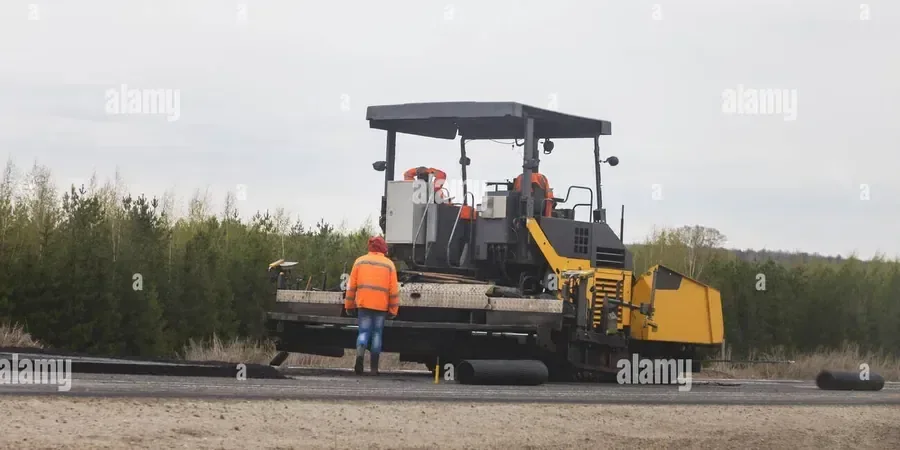
Technical reference image — Wigan

Local context

Wigan sits on the Lancashire Coalfield. Unrecorded mine entries and shallow bell pits exist beneath roads and industrial estates. A pavement founded above a collapsing void fails in a matter of weeks. The Coal Authority’s mining reports are a mandatory starting point, but they do not replace direct investigation. We run ground-penetrating radar lines along the proposed alignment and drill probe holes into any anomaly before pavement design begins. The second risk is frost heave in the Pennine-derived silts that mantle the higher ground around Haigh and Aspull. A frost susceptibility test to BS 812-124 determines whether the capping layer must be deepened below the maximum frost penetration depth of 450 mm. Differential settlement across the boundary between cut and fill sections adds a third failure mode, particularly on the approach to bridge abutments like those over the Leeds and Liverpool Canal.

Need a geotechnical assessment?

Reply within 24h.

Email: contact@geotechnical-engineering.biz

Technical parameters


ParameterTypical value
Design life for main distributor roads40 years
Minimum subgrade CBR (unstabilised)2.5 %
Target air voids in base course4–6 %
Type 1 sub-base thickness (heavy traffic)225 mm minimum
Bitumen penetration grade40/60 or 100/150 pen
Load transfer mechanismGranular interlock + binder cohesion
Standard axle load for pavement analysis80 kN (single axle dual wheels)

Additional services

01

Pavement investigation and subgrade assessment

Trial pitting, dynamic cone penetrometer profiles and CBR field tests along the alignment. Laboratory classification of subgrade soils to determine frost susceptibility, sulfate content and stabilisation potential. Ground-penetrating radar scanning for mine workings and buried structures.

02

Mechanistic-empirical pavement design

Multilayer elastic analysis calibrated to site-measured resilient moduli. Asphalt, granular and stabilised layer thickness design for the project traffic loading. Drainage design, frost protection depth verification and construction specification to SHW Series 800 and 900.

Reference standards

BS 5930:2015+A1:2020 — Code of practice for ground investigations, Highways England DMRB CD 226 — Design for new pavement construction, BS EN 1997-1:2004 — Eurocode 7: Geotechnical design, SHW Series 800 — Road Pavements — Unbound, Cement and Other Hydraulically Bound Mixtures, BS 812-124:2009 — Method for determination of frost heave

Quick answers

What is the typical cost range for a flexible pavement design in Wigan?

The fee for a full pavement investigation and design package — including site work, laboratory testing and the design report — falls between £1,310 and £4,060. The spread depends on the length of road, number of test locations and whether mine workings investigation is required. A short access road on a clean site sits at the lower end; a distributor road crossing former colliery land with GPR scanning and multiple CBR profiles reaches the upper range.

How does the Coal Authority mining report affect pavement design in Wigan?

The mining report identifies recorded shafts, adits and shallow workings within the scheme boundary. If any feature falls beneath the pavement footprint, we design a reinforced geogrid at the sub-base level and specify a grouting investigation. The pavement cross-section is not finalised until the mining risk is either ruled out by probe drilling or mitigated by treatment.

What traffic loading does a Wigan residential road require?

A residential cul-de-sac carrying fewer than 0.5 million standard axles over its design life can be designed with a thinner bound layer, typically 40 mm of surface course over 150 mm of Type 1 sub-base. Bus routes and industrial access roads demand a full DMRB CD 226 analysis with cumulative traffic figures derived from classified counts and growth factors.

Can a flexible pavement be designed on soft alluvial ground near the River Douglas?

Yes, but the subgrade CBR is often below 2 %. We stabilise the upper 350 mm with lime or cement, re-test the CBR after a curing period, and then design the pavement layers above the treated platform. Drainage is critical — a French drain along the low side of the formation keeps the water table below the capping to prevent saturation weakening.
Location and service area

We serve projects across Wigan and its metropolitan area.

View larger map