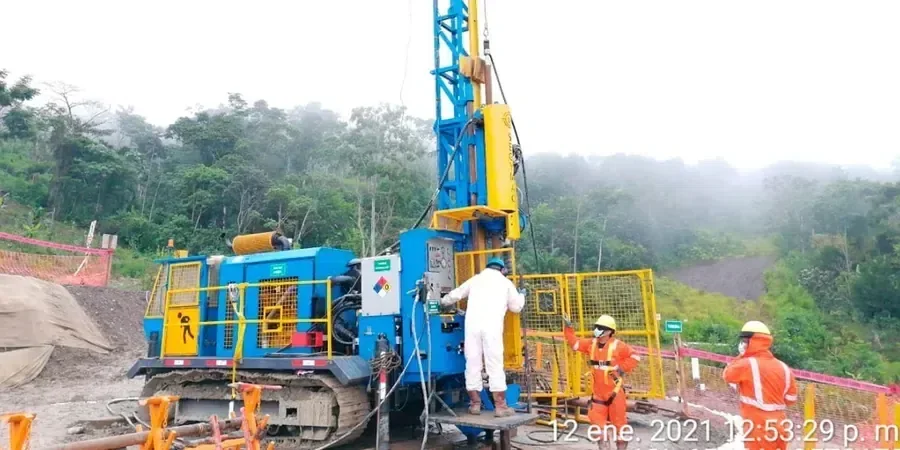
In-situ testing forms the backbone of reliable geotechnical investigation across Wigan, providing engineers with direct measurements of ground conditions without the disturbance associated with sampling and laboratory work. This category encompasses a range of field-based techniques designed to assess soil strength, density, permeability, and deformation characteristics in their natural state. For a borough with a complex industrial legacy and ambitious regeneration targets, understanding the true behaviour of the ground beneath a site is not just a technical requirement—it is a fundamental safeguard against costly failures and delays.
Wigan's geology presents a particularly challenging environment for construction. Much of the borough is underlain by the Pennine Middle Coal Measures, comprising interbedded sandstones, siltstones, mudstones, and historically worked coal seams. Overlying these solid strata, extensive deposits of glacial till, glaciofluvial sands, and post-glacial alluvium create a highly variable near-surface profile. In many areas, particularly along the Douglas Valley and former industrial corridors, made ground containing colliery spoil, ash, and other anthropogenic materials can extend to significant depths. These conditions demand rigorous in-situ assessment, as disturbed samples often fail to capture the true fabric and strength of these complex deposits.
All in-situ testing undertaken in Wigan must comply with the relevant British Standards, notably BS 5930 for the Code of practice for ground investigations, and BS 1377 for methods of test for soils for civil engineering purposes. The execution of specific tests, such as the field density test (sand cone method), falls under these overarching frameworks, ensuring consistency and reliability in data collection. Depending on the project, additional standards such as Eurocode 7 (BS EN 1997-2) for geotechnical design, and the requirements of the Environment Agency for contamination assessments, may also govern the scope and interpretation of the investigation. Adherence to these standards is mandatory for regulatory approval and forms the basis of robust foundation design.
The application of in-situ testing in Wigan spans a wide spectrum of projects. Residential developments on former brownfield sites require thorough compaction verification to mitigate settlement risks, while commercial and industrial schemes in the town centre and logistics hubs like Martland Park demand precise bearing capacity and settlement analysis. Infrastructure projects, including highway improvements on the M6 and M58 corridors and flood alleviation schemes along the River Douglas, rely on in-situ permeability and strength data for earthworks and structural design. Even smaller-scale domestic extensions can encounter unforeseen ground conditions that necessitate field testing to avoid structural issues, making these activities essential across the board.
In-situ testing measures soil properties in its natural state, preserving stress conditions, fabric, and moisture content, which is critical for materials like glacial till that are easily disturbed. Laboratory tests on sampled soils can suffer from sample disturbance, particularly in granular or fissured materials. A comprehensive ground investigation typically combines both approaches, using in-situ tests to calibrate and validate laboratory results for a more reliable geotechnical model.
For verifying compaction of engineered fill on brownfield sites, a field density test such as the sand cone method is commonly specified. This provides a direct measurement of in-place dry density and moisture content, which is then compared against the maximum dry density from laboratory compaction tests. Other rapid methods like nuclear density gauges may be used for large areas, but the sand cone test serves as a definitive reference for compliance with BS 1377.
The extensive shallow coal workings beneath Wigan pose a significant collapse and settlement risk. In-situ testing must be designed to detect voids, assess the integrity of the rock mass above workings, and characterise any unconsolidated mine fill. Rotary drilling with downhole inspection and standard penetration tests (SPTs) within rockhead are often essential, alongside dynamic probing to identify soft zones, before a safe foundation solution or grouting programme can be designed.
The primary standard is BS 5930, which provides the code of practice for all ground investigation activities, including the planning and execution of in-situ tests. Specific test methods, such as the California Bearing Ratio (CBR) or field density tests, are detailed in BS 1377. Additionally, the geotechnical design of structures must conform to Eurocode 7 (BS EN 1997-2), which specifies the derivation of geotechnical parameters from field test results for ultimate and serviceability limit state design.
We serve projects across Wigan and surrounding areas.