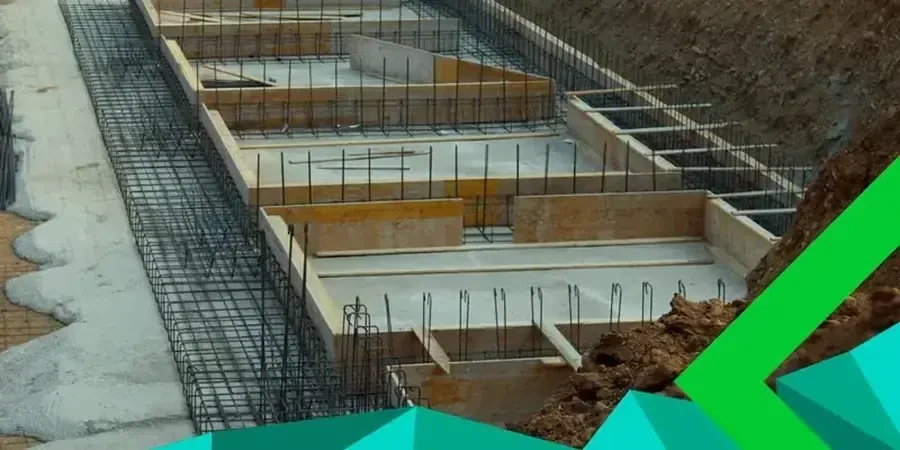
Shallow foundation design in Wigan cannot rely on textbook bearing values. The borough sits squarely on the Lancashire Coalfield, where the Pennine Middle Coal Measures underlie much of the urban area; historic workings, backfilled shafts and variable drift cover mean a desk-study alone never tells the full story. We apply Eurocode 7 (BS EN 1997-1:2004) Design Approach 1 from the first trial pit log, combining ground investigation with local knowledge of the Worsley Four Foot and Trencherbone seams to flag mining risk before a foundation outline is even sketched. In our knowledge, the Douglas valley and areas around Ince-in-Makerfield often hide soft alluvial pockets beneath a stiff glacial till crust — classic conditions for differential settlement if the bearing stratum is not properly identified. Complementing the shallow design with in-situ permeability testing early in the programme clarifies drainage requirements and helps avoid buoyancy surprises on low-lying sites.
In a borough where Coal Measures bedrock can lie 1.5 metres or 15 metres below street level depending on glacial scour, shallow foundation design starts with proving depth to competent bearing ground.
Local context
A recurring pattern we see on Wigan sites is made ground that looks competent at first glance — compacted colliery spoil, ash or brick rubble that gives reasonable dynamic probe blows — but hides voids or degradable material at depth. We have encountered open mine entries less than 2 metres below cover in the Pemberton and Bryn areas, where surface evidence had been completely erased by mid-century landscaping. Another risk that catches out small-plot developers is shrinkable clay in the weathered till; the boulder clay across the Orrell and Standish uplands can show moderate plasticity, and a strip footing placed without accounting for seasonal moisture variation will crack brickwork within three years. Shallow foundation design here must therefore integrate a mining desk study, a plasticity index check and a solid drainage strategy — never one in isolation. Where the Coal Authority search flags a probable shaft within the site curtilage, we drill and grout before any concrete is poured, combining the foundation design with targeted grouting to stabilise the column.
Quick answers
How much does a shallow foundation design package cost for a Wigan site?
For a single residential plot or small extension, a complete shallow foundation design package — including trial pits, laboratory testing, bearing capacity and settlement calculations, plus the signed design report — typically falls between £1,370 and £2,780. The spread depends on the number of pits, the depth of made ground and whether a Coal Authority mining report triggers additional probing; commercial footprints run higher because of the extra sampling and analysis required.
Do I always need a mining report for a foundation design in Wigan?
Within the Development High Risk Area defined by the Coal Authority — which covers much of Wigan borough — yes, a mining report is a standard requirement before any foundation design is finalised. Even outside the formal high-risk zone, we recommend at least a Consultants' Report because the density of historic bell pits and air shafts in the coalfield is significant, and a few hundred pounds spent on the report can prevent a costly redesign later.
What bearing capacity can I expect on glacial till in Wigan?
Stiff Devensian till across the higher ground around Standish and Haigh can often yield an allowable bearing pressure of 150–250 kPa for strip footings, but that number must be verified by trial pit or borehole data because the till matrix here is highly variable — it can transition from gravelly clay to sandy silt within a few metres. We run settlement checks alongside bearing calculations, because total settlement tends to govern the allowable pressure on the softer lenses.
How do you handle shallow foundations on colliery spoil or made ground?
If the made ground is shallow — less than 1.5 metres — we often specify excavation through it to bear onto competent natural till or bedrock, backfilling with engineered granular fill. When the spoil extends deeper, we shift the design to a reinforced ground-bearing raft or consider vibro-replacement, and we always verify the fill's chemical aggressivity with BRE SD1 testing to specify the correct concrete class for buried elements.
How long does the ground investigation and design process take?
For a typical domestic extension or single dwelling, the field investigation — trial pits and any dynamic probing — is completed in one day, laboratory tests take about seven to ten working days, and the design report follows within another week. The end-to-end process usually runs three to four weeks, assuming weather allows machine access and the Coal Authority report is ordered early.